
Redundancy & high availability

Two WBox gateways mirrored: if one fails, the other takes over automatically, with no service interruption.

How it works

The redundancy module runs two WBox gateways in parallel, each with its own IP address. One is the Master (active), the other the Slave (standby). The Slave listens to the Master and synchronises continuously: configuration, routes, values and logic are replicated in real time. If the Master goes offline, the Slave automatically takes over the Master’s IP address and resumes the service. Clients, supervision and field equipment keep talking to the same address, with no reconfiguration at all.
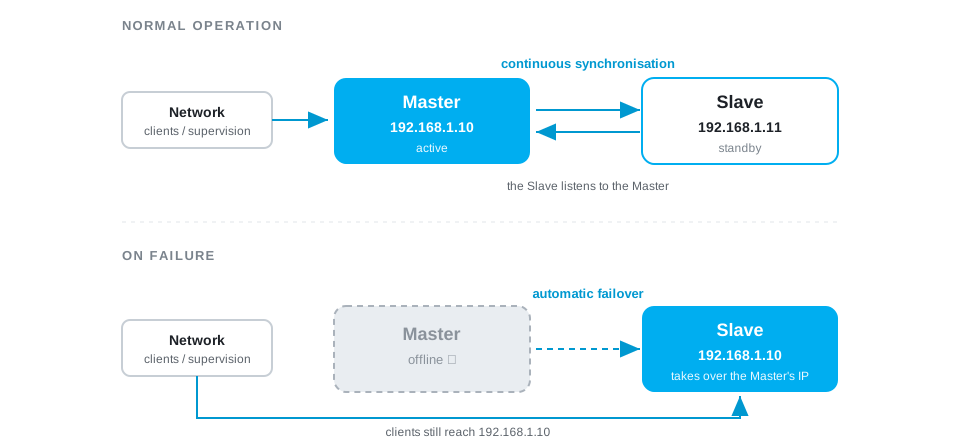
Weble redundancy diagram: two Master and Slave gateways with two IP addresses, continuous synchronisation, and automatic IP failover on failure

Step by step

  • Two gateways, two IPs — one active Master and one standby Slave, each with its own IP address.
  • Continuous synchronisation — the Slave listens to the Master and continuously replicates its configuration and data (routes, values, logic).
  • Continuous monitoring — the Slave constantly checks that the Master is reachable.
  • Automatic failover — if the Master goes offline, the Slave takes over the Master’s IP address and resumes the service.
  • Service continuity — clients, supervision and equipment always talk to the same IP address, with no reconfiguration.

Licensing & benefits

A single licence covers both redundant devices: it is activated on the Master, and the Slave runs without a dedicated licence. The module targets critical installations — industry, infrastructure and any site demanding maximum availability.

  • No single point of failure — losing one gateway does not interrupt the service.
  • Seamless takeover — the IP address switches automatically, with no intervention.
  • Maintenance without downtime — service one gateway while the other keeps the service running.