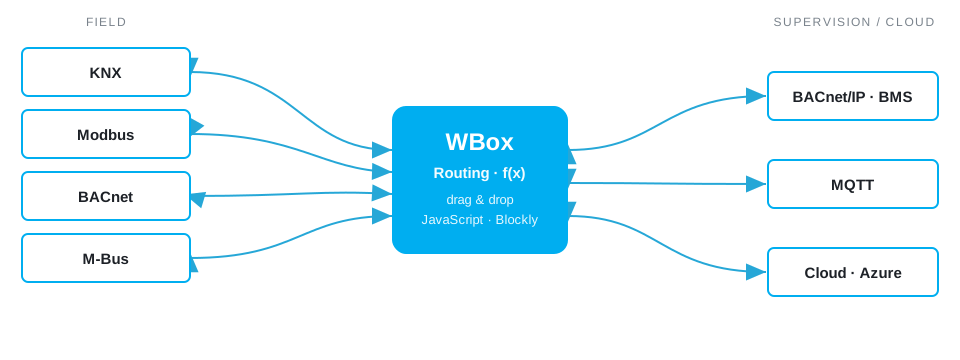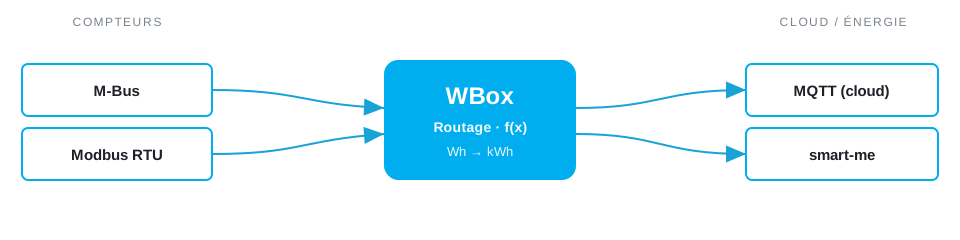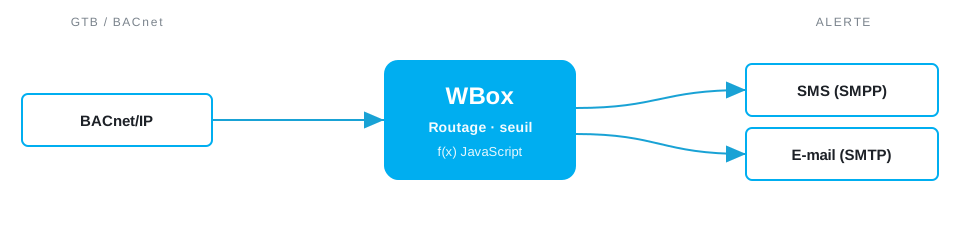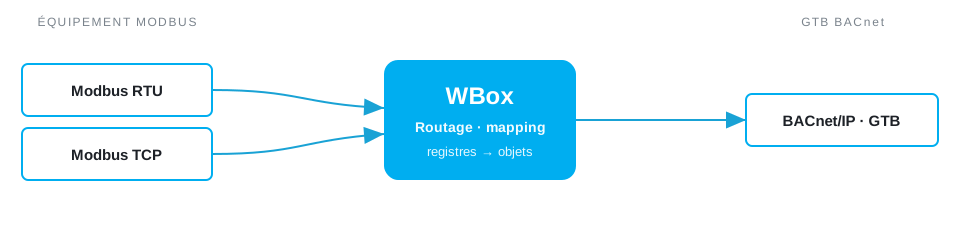
In a building, every trade speaks its own protocol: comfort over KNX, the BMS over BACnet, field equipment over Modbus, utility metering over M-Bus, cloud and industry over MQTT or OPC UA. On their own, these networks don’t talk. Inter-protocol routing — the WBox’s core function — reads data points from one protocol and exposes them on another, in real time.
- Everything runs on the gateway — enable the source and destination drivers, then map the points; conversion, scaling and logic execute on the WBox itself, with no PC, no middleware, no cloud dependency.
- Any serialisable data — numeric values, strings, JSON objects; one-way or bidirectional routes.
- As many routes as you need — a single gateway handles many routes at once, across all the protocols it supports.
- Open, no vendor lock-in — integrate existing installations without proprietary hardware; the full stack also ships as a Windows application (PC, server, virtual machine).